Description
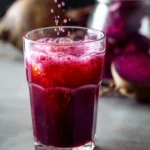
Delicious and health-boosting fermented beet kvass recipe, perfect for gut health.
Ingredients
Scale
- 2 medium beets, organic (2 cups diced, with skin on)
- 3 cups filtered water
- 1 tablespoon fine sea salt
- ¼ cup whey (the liquid from strained yogurt) or fermented pickle brine or fermented sauerkraut brine
Instructions
- Rinse and slice the beets into ¼-inch thick rounds, then dice them, leaving the skin on.
- Get a clean 2-quart mason jar. If adding any whole spices, add these to the jar first, then add garlic, onion or dill if using. Add all the beets over the top.
- If adding whey, kraut brine or pickle brine, add this now.
- Mix 3 cups of water with 1 tablespoon of fine sea salt. Pour this into the jar, leaving at least 1-2 inches of headroom at the top.
- If you want to add more brine, the ratio is 1 heaping teaspoon of salt per 1 cup of water. Mix it first, then add.
- Cover with a loose-fitting lid. Place in a bowl or baking dish to collect any overflow, a sign of fermentation.
- Place the jar in a cool, dark place; 60°F-70°F is ideal. Check every couple of days, removing seeds if need be.
- If you added whey or brine, you should see some action within 2-3 days. If not, it can take 1-2 weeks before you notice slight bubbling when you tap the jar, indicating that it is fermenting.
- The longer it ferments, the more tangy it will taste. For an even tangier flavor, continue fermenting for 1-2 more weeks. Once happy with the flavor, refrigerate.
- (Either strain, or leave beets in.) It will continue to ferment in the fridge but at a much slower rate, developing more depth of flavor.
- If you notice any white foam on top of your kvass, it is most likely kahm yeast and harmless. Skim it off with a spoon and toss. If you see mold, discard the batch.
Notes
- This kvass is a great source of probiotics.
- The sugar from the beets will continue to feed the healthy bacteria.
- Always check for floaters daily to prevent mold.
- Prep Time: 15 minutes
- Category: Drink
- Method: Fermentation
- Cuisine: Global
Nutrition
- Serving Size: 1 cup